What a Fortnite skin return date actually means
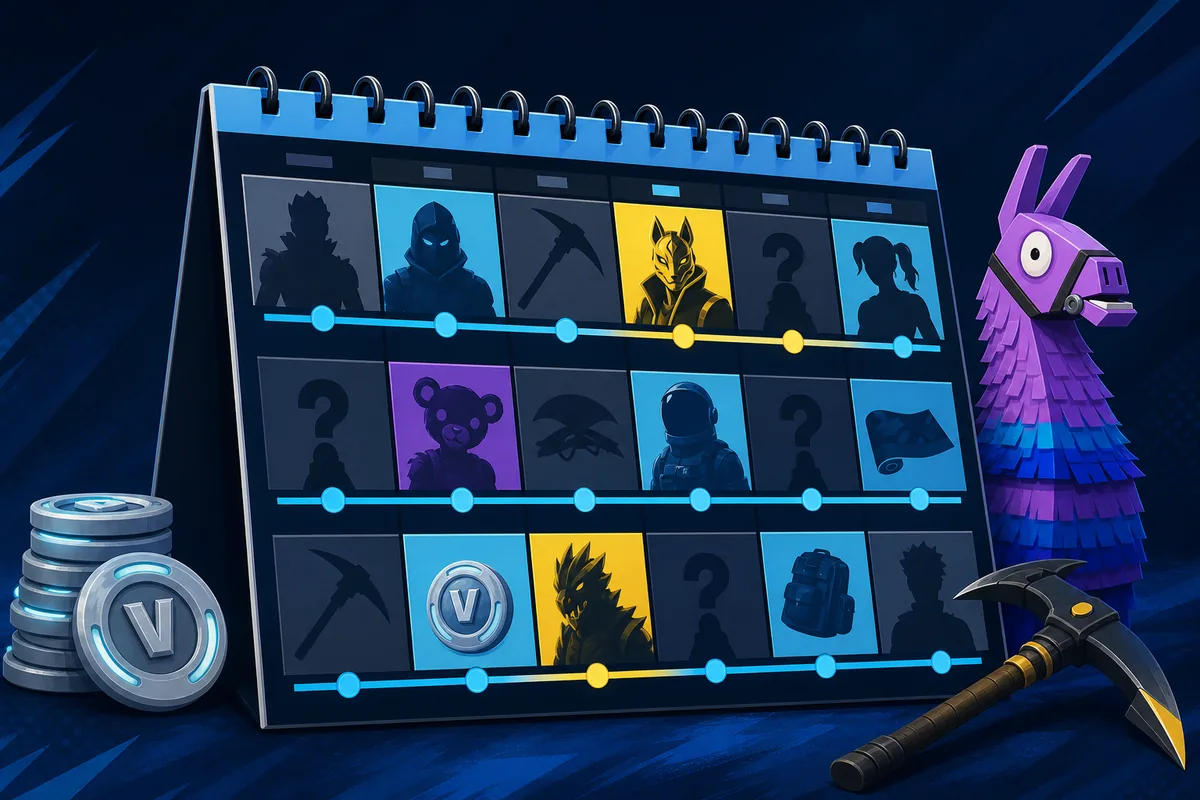
A return date is the day a cosmetic becomes available again through a shop, bundle, event, promotion, or another official path. It is not the same as a leak, a community guess, or a timer copied from an old shop listing. Fortnite can rotate cosmetics quickly, and a skin that looked inactive for months can appear again when a theme, collaboration, or event becomes relevant.
The first mistake is treating every cosmetic as if it follows the same shop rule. A normal outfit sold in the item shop is different from a past reward, a Crew item, a platform bundle, or a licensed crossover. If the source type is wrong, the return-date prediction will also be wrong.
| Signal | What it tells you | Best action |
|---|---|---|
| Current shop tab | A themed tab may group related cosmetics for a short period. | Check the live shop first, then confirm in-game. |
| Past return gap | A long absence explains demand but does not prove a date. | Use it as context, not a countdown. |
| Official event | A festival, tournament, movie, or brand event can support a return. | Look for Epic or partner announcements. |
| Related set activity | One item returning can make the rest of a set more plausible. | Watch the set, but avoid assuming every item returns. |
| Unlock source | Battle Pass, reward, pack, Crew, and shop items have different rules. | Do not compare locked rewards with rotating shop outfits. |
Strong signals vs weak signals for a skin coming back
The strongest signals are official or visible inside Fortnite: an active shop tab, an Epic announcement, a themed event, a related set returning, or an offer that already has an out date. These signals still do not guarantee every skin in a set will return, but they are stronger than anonymous social posts or recycled screenshots.
Weak signals include vague 'soon' posts, old screenshots with no current date, countdown graphics from fan accounts, and claims that a skin must return because it has been absent for a long time. A long absence can make a skin more searched, but it does not force the shop schedule.
Official or in-shop evidence
Epic posts, active tabs, event pages, and visible shop offers are the best signals because players can verify them.
Pattern or set evidence
Related cosmetics, annual events, and past rotations can make a return plausible, but they still need confirmation.
Rumor-only evidence
Uncredited screenshots, exact-date claims, and engagement posts should not drive a V-Bucks decision.
Shop skins, collaboration skins, and locked rewards are not the same
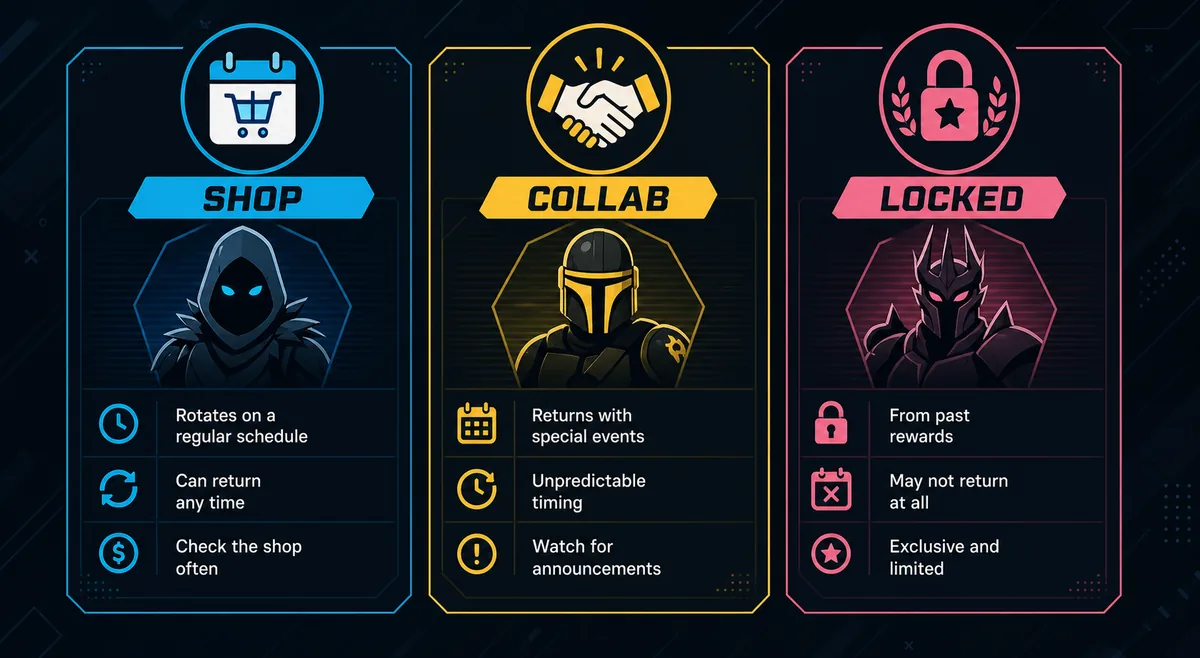
Normal item shop cosmetics are the easiest category to understand: if the item has previously been sold in the shop and has no special restriction, it may return when Epic schedules it. The exact day is still not public until the shop updates or an official announcement appears.
Collaboration skins need extra caution. A movie, music artist, sports league, or game crossover can return around a new release or anniversary, but licensing can also keep a skin away for a long time. Old rewards and pass cosmetics are a separate category. Epic's public help and Battle Pass policy pages should be checked before assuming a past reward will rotate like a normal shop skin.
- Item shop outfit: return is possible, date usually unconfirmed until visible.
- Collaboration outfit: return may depend on partner timing and rights.
- Battle Pass or reward item: do not apply normal item shop rotation logic.
- Pack, platform, or code cosmetic: eligibility and purchase path matter as much as timing.
How to check a Fortnite skin return date in 4 steps
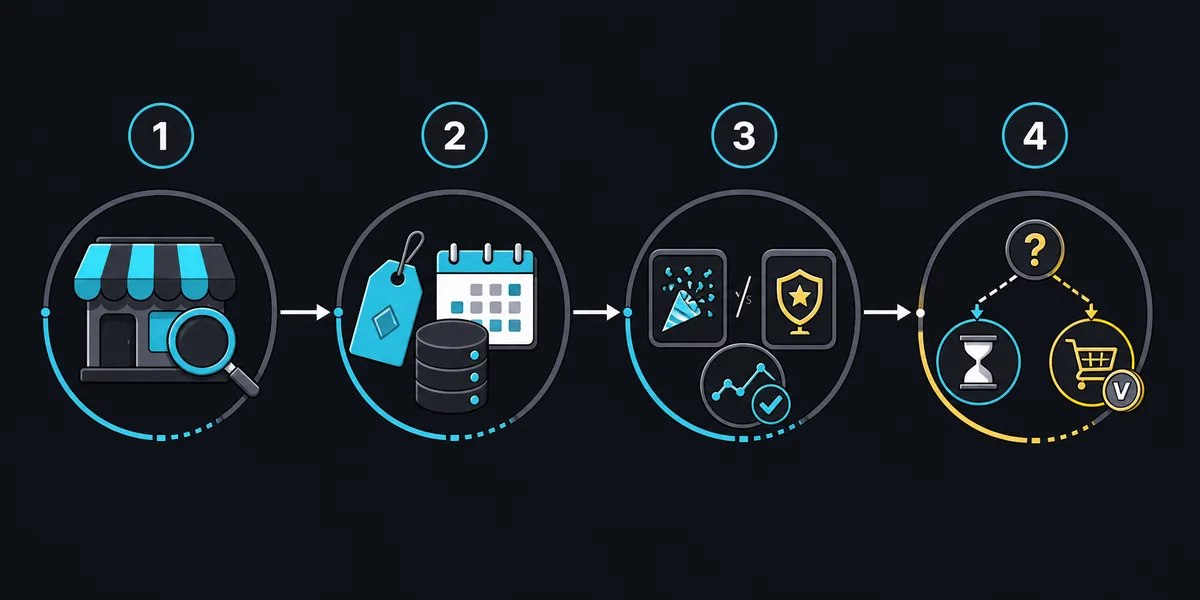
Start with the current shop because it is the only place where a normal returning cosmetic becomes actionable. If the skin is not there, identify its source type before reading prediction posts. Then look for official events, related set activity, and reliable public databases that show past appearances.
The final step is deciding whether the evidence is strong enough to wait, save V-Bucks, or ignore the rumor. A player with limited V-Bucks should treat unconfirmed dates as planning notes, not as a purchase deadline.
Use the live shop and the in-game store to confirm whether the skin is actually available.
Separate shop cosmetics from pass, reward, pack, Crew, and collaboration items.
Look for official events, related tabs, return gaps, and set activity.
Spend only after confirmation; use rumors only to plan a possible V-Bucks budget.
Should you buy now or wait for a returning skin?
If a skin you wanted is currently visible in your own Fortnite account, the decision is practical: compare price, bundle value, refund-token rules, how often you will use it, and whether another cosmetic has higher priority. If a skin is only rumored to return, keep your V-Bucks flexible and do not skip confirmed items you actually prefer because of an unverified date.
Avoid account sales, code resellers, and claims that a rare skin return date makes an account valuable. Cosmetic demand can be real, but risky account deals are not a safe way to obtain a skin. The safest path is still the in-game shop or an official Epic purchase path when the item is actually available.